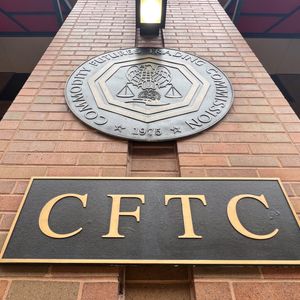
The US Commodity Futures Trading Commission (CFTC) has sued the state of Minnesota following a law that prohibits prediction markets like those run by Kalshi and Polymarket. The federal regulator contends that Minnesota’s new law contradicts federal law and unfairly places penalties on companies and consumers who engage with federally regulated prediction markets. A legal battle could become one of the most consequential yet — fights over who controls the rapidly expanding prediction market business in the United States. Minnesota became the first state to enact a full ban on prediction markets after Governor Tim Walz signed it on Monday. The law, effective from August 1, would outlaw the operation, hosting, or promotion of prediction markets in the state. Prediction markets enable one to bet on contracts linked to the outcomes of real-world events. Those can be elections, sports events, economic events, and even entertainment events. Supporters claim that these platforms are financial markets regulated by the federal system; opponents say they behave too much like online gambling. The CFTC filed the lawsuit on Tuesday, arguing that Minnesota’s law violates the Constitution because it attempts to regulate financial derivatives markets under federal authority. Only the CFTC, the regulator says, has the authority to oversee these types of event contracts. In a public statement, CFTC Chairman Michael Selig heavily lambasted the Minnesota law. This Minnesota law turns lawful operators and participants in prediction markets into felons overnight. Michael Selig Why is Minnesota trying to ban prediction markets? Minnesota officials say the act is intended to protect consumers, particularly younger users and low-income residents who could be susceptible to gambling-related harm. Minnesota Attorney General Keith Ellison said his office would defend the law and questioned the social implications of prediction markets. “Prediction markets are designed to be addictive and prey especially on young people and low-income folks,” Ellison said. “They help the ultra-rich get richer, and the rest of us get poorer.” As prediction markets grow in popularity, critics increasingly say they are similar to sports betting or online casinos, particularly as they expand into contracts linked to sports events. Some states contend companies, including Kalshi, are offering unlicensed gambling products, including access to users under the age of 21. Yet at the same time, the companies in prediction markets argue their products are legal financial instruments rather than gambling services. They cite federal oversight by the CFTC, and say event contracts operate as they do in other derivatives markets used for hedging and speculation. The industry has seen explosive growth over the past year. Kalshi, recently valued at $22 billion, has become one of the biggest regulated prediction market operators in the United States. A growing legal battle across the United States The Minnesota lawsuit is not the first legal struggle between the CFTC and state regulators. Several states have already tried to prevent prediction market operators from offering contracts within their borders. The CFTC only recently received a court order preventing Arizona from pursuing a criminal case against Kalshi. But not every state challenge has been unsuccessful. Nevada is currently the only state with a court-enforced ban on Kalshi in full effect. Meanwhile, Massachusetts awaits a determination on whether to enforce an injunction that would prevent Kalshi from offering sports-event contracts in the state. So far, these court cases have cast doubt on the entire prediction market business. A key question before US courts now is whether prediction markets should be regarded mainly as federally regulated financial exchanges or as state-regulated gambling operations. What could happen next? The lawsuit between the CFTC and Minnesota may gain national notice because it’s a direct challenge to the balance of power between federal regulators and state governments. The CFTC has consistently maintained that prediction market contracts fall under federal derivatives law, a position that has strengthened firms like Kalshi as they continue to challenge state-level restrictions. If the courts side with the CFTC, states may face limits on their ability to ban or regulate prediction markets. But if Minnesota wins, other states may soon introduce similar bans, leading to a patchwork of laws across the country. If you're reading this, you’re already ahead. Stay there with our newsletter .