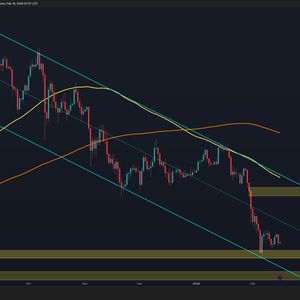
BitcoinWorld S&P 500 Volatility: The Alarming AI Scare Triggering a Historic Market Repricing – Deutsche Bank Warns NEW YORK, March 2025 – A sudden wave of volatility is broadening across the S&P 500, according to a new analysis from Deutsche Bank, as mounting fears about artificial intelligence’s economic impact trigger a significant repricing of major market sectors. The bank’s research indicates that what began as a technology-led correction is now spreading, fundamentally challenging previous valuation models and investor assumptions that have dominated the early part of the decade. S&P 500 Volatility Expands Beyond Tech Deutsche Bank strategists report that market turbulence, initially concentrated in mega-cap technology stocks, is now exhibiting clear contagion effects. Consequently, traditional defensive sectors and even recently stable industries are experiencing heightened price swings. This broadening volatility directly correlates with a reassessment of AI’s long-term profitability and regulatory landscape. Furthermore, investors are rapidly adjusting their portfolios, leading to unusual correlations between previously disconnected asset classes. The CBOE Volatility Index (VIX) has reflected this shift, maintaining elevated levels even during brief market rallies. Historical data comparison shows the current volatility dispersion pattern resembles precursors to more sustained market revaluations. The Core Drivers of the AI Market Scare The “AI scare” stems from multiple converging factors that Deutsche Bank highlights in its client notes. First, regulatory pressures are intensifying globally, threatening the operational models of leading AI firms. Second, questions about the sustainability of AI-driven revenue growth are prompting earnings revisions. Third, a series of high-profile technological setbacks have eroded some of the sector’s perceived invincibility. Regulatory Headwinds: Antitrust investigations and proposed AI governance frameworks in the US, EU, and China are creating unprecedented uncertainty. Earnings Reality Check: Sky-high valuations demanded flawless execution, but recent quarterly reports have revealed significant cost inflation and longer-than-expected paths to profitability for AI initiatives. Technological Stumbles: Publicized failures in autonomous systems and generative AI outputs have introduced tangible risk assessments into investment theses. These elements collectively force a repricing of risk across the equity landscape. Deutsche Bank’s Analytical Framework Deutsche Bank’s quantitative team employs a multi-factor model to track the volatility spillover. Their analysis shows that the sensitivity of non-tech stocks to AI sector news has increased by over 40% in the past quarter. This metric, which they term the “AI Beta,” is now a significant component in their risk assessments for consumer discretionary, industrial, and even healthcare stocks. The bank’s chart analysis, referenced in their report, illustrates a decisive break from the low-volatility regime of 2023-2024. Sector-by-Sector Impact of the Repricing The market repricing is not uniform. Deutsche Bank identifies clear winners and losers in this new environment. Traditional value sectors with low AI exposure and strong cash flows, such as certain energy and utilities companies, are seeing relative stability. Conversely, companies heavily invested in AI infrastructure face severe multiple compression. The table below summarizes the observed shifts: Sector Volatility Change Primary Driver Technology (AI-Centric) Sharply Higher Regulatory & Profitability Fears Communications Moderately Higher Ad Revenue Linked to AI Platforms Consumer Discretionary Higher Supply Chain & Automation Dependence Utilities Neutral/Lower Low AI Exposure, Defensive Characteristics Healthcare (Tech-Heavy) Higher AI Diagnostic & Drug Discovery Revaluation This sector rotation indicates a fundamental shift in how market participants are discounting future cash flows in an AI-permeated economy. Historical Context and the Path Forward Market historians at Deutsche Bank draw parallels to other technological inflection points, such as the dot-com bubble and the financialization scare of 2008. However, they note a key difference: the speed of information dissemination and algorithmic trading has accelerated the repricing process dramatically. The bank’s base case scenario anticipates continued elevated volatility through mid-2025 as the market finds a new equilibrium. Their recommended strategy involves a barbell approach—blending deeply discounted quality AI plays with resilient, non-cyclical assets. Ultimately, they conclude that while the AI revolution’s long-term trajectory remains intact, its market valuation is undergoing a necessary and healthy correction. Conclusion The S&P 500 volatility surge, as detailed by Deutsche Bank, represents a critical moment of market maturation regarding artificial intelligence. The broadening of volatility beyond the tech sector confirms that the AI scare is driving a comprehensive market repricing with wide-ranging implications. Investors must now navigate a landscape where old sector correlations are breaking down and new risk factors dominate. Deutsche Bank’s analysis provides a crucial framework for understanding this transition, emphasizing data-driven assessment over sentiment as the market recalibrates to the true economic implications of AI. FAQs Q1: What does Deutsche Bank mean by “volatility broadening” in the S&P 500? A1: It refers to the phenomenon where sharp price swings, initially confined to technology and AI-focused stocks, are now spreading to other sectors of the market like industrials, consumer discretionary, and healthcare, indicating a market-wide reassessment of risk. Q2: What specific events triggered the “AI scare” in 2025? A2: Key triggers include heightened global regulatory actions targeting AI giants, disappointing earnings reports that questioned AI profitability timelines, and several publicized technical failures in AI systems, which collectively undermined investor confidence in previously sky-high valuations. Q3: How is this market repricing different from a typical correction? A3: Unlike a typical correction driven by interest rates or economic data, this repricing is fundamentally driven by a reassessment of a specific technological paradigm (AI). It is causing a re-rating of company valuations based on their exposure to and dependence on AI, affecting sectors far beyond pure tech. Q4: Which sectors are most vulnerable according to the analysis? A4: Sectors most vulnerable are those with high capital expenditure in AI infrastructure, those whose business models are tightly integrated with AI platforms (like certain advertising-driven communications firms), and healthcare companies betting heavily on AI-driven drug discovery or diagnostics. Q5: What is Deutsche Bank’s advice to investors in this environment? A5: Deutsche Bank advocates for a disciplined, barbell investment strategy. This involves selectively investing in high-quality AI companies that have been oversold but possess strong fundamentals, while simultaneously allocating capital to defensive sectors with stable cash flows and low AI-related risk, such as certain utilities and consumer staples. This post S&P 500 Volatility: The Alarming AI Scare Triggering a Historic Market Repricing – Deutsche Bank Warns first appeared on BitcoinWorld .