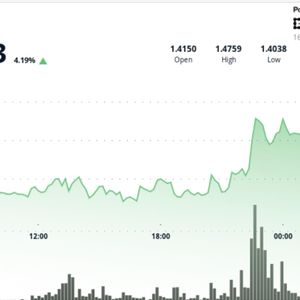
BitcoinWorld Crypto Futures Liquidations Surge: $122 Million Wiped Out in 24-Hour Market Shakeout A significant wave of liquidations swept through cryptocurrency perpetual futures markets over a recent 24-hour period, erasing an estimated $122 million in leveraged positions and highlighting the persistent volatility within digital asset derivatives. Data from major trading platforms reveals a pronounced skew, with the vast majority of forced position closures impacting traders betting against the market’s direction. This event provides a critical snapshot of current market leverage, sentiment, and risk management practices among crypto derivatives participants. Crypto Futures Liquidations: A Detailed Breakdown of the 24-Hour Data The liquidation data presents a clear and compelling narrative of market forces at work. Analysts estimate total liquidations across the three largest altcoins by futures volume exceeded $122 million. Bitcoin (BTC), the market benchmark, saw $53.15 million in positions forcibly closed. Remarkably, short positions accounted for 86.08% of this total, indicating a swift price move that caught bearish traders off guard. Ethereum (ETH) experienced an even larger nominal value liquidated at $55.68 million, with an overwhelming 83.64% of those being short contracts. Solana (SOL) witnessed the most asymmetric squeeze, with $13.18 million liquidated and a staggering 90.96% stemming from short positions. This pattern suggests a coordinated, albeit brief, upward price movement that triggered cascading margin calls across multiple assets. Understanding Perpetual Futures and Liquidation Mechanics Perpetual futures contracts, unlike traditional futures, have no expiry date. Traders use them to speculate on price direction with significant leverage, often borrowing funds to amplify potential gains and losses. Exchanges maintain these markets by using a funding rate mechanism and by automatically closing positions when a trader’s collateral (margin) falls below a maintenance threshold. This process is a liquidation. Consequently, large liquidations often cluster during periods of high volatility, creating feedback loops that can exacerbate price swings. Market analysts closely monitor liquidation levels to gauge potential points of market stress and over-leverage. The Ripple Effects of a Short Squeeze The data strongly indicates a short squeeze scenario. When prices rise rapidly, traders with short positions face mounting losses. If they cannot add more collateral, their positions get liquidated. The exchange automatically buys back the asset to close the short, creating additional buy-side pressure. This buying can push prices higher, potentially triggering more short liquidations in a cascading effect. The extreme ratios for BTC, ETH, and SOL suggest such a cascade occurred, albeit within a contained timeframe. Historical context shows similar squeeze events often precede or follow major news catalysts or large institutional order flows. Comparative Analysis and Market Context Placing this event in a broader context requires examining relative scale and historical parallels. While $122 million is a substantial sum, it pales in comparison to liquidation events during major bull or bear markets, which can reach into the billions daily. The concentration in shorts, however, is notable. The following table compares key metrics from this event: Asset Liquidation Volume Short Ratio Notable Context Bitcoin (BTC) $53.15M 86.08% Dominant market leader; liquidations often set tone for wider market. Ethereum (ETH) $55.68M 83.64% Slightly higher volume than BTC, reflecting its deep derivatives market. Solana (SOL) $13.18M 90.96% Highest short ratio, indicating extreme directional bet against it. This data reveals several insights. First, Ethereum’s derivatives market activity sometimes rivals or exceeds Bitcoin’s in nominal terms. Second, Solana’s exceptionally high short ratio could reflect heightened speculative sentiment or reaction to recent network performance updates. Market structure experts note that elevated liquidation levels, while a reset for over-leveraged positions, also remove potential future buying or selling power from the market, potentially leading to a consolidation phase. Risk Management and Trader Implications Liquidation events serve as a stark reminder of the risks inherent in leveraged trading. Professional traders emphasize several key risk management strategies: Using Stop-Loss Orders: Pre-defining exit points helps avoid automatic liquidations. Conservative Leverage: Lower leverage multiples reduce the likelihood of a margin call during normal volatility. Monitoring Funding Rates: Persistently high positive or negative rates can signal crowding and impending squeezes. Portfolio Diversification: Avoiding over-concentration in a single highly-leveraged position. Exchanges themselves continuously adjust risk parameters, including maintenance margin ratios and insurance fund sizes, to manage systemic risk. Regulatory bodies in various jurisdictions are increasingly scrutinizing these mechanisms to ensure consumer protection and market stability. Conclusion The recent 24-hour crypto futures liquidations event, totaling over $122 million, underscores the dynamic and often unforgiving nature of cryptocurrency derivatives markets. The overwhelming dominance of short position liquidations points to a sharp, coordinated upward price movement that triggered a cascade of margin calls. While not a historically large event in absolute terms, the data provides valuable real-time insight into market sentiment, leverage levels, and areas of potential vulnerability. For traders, it reinforces the non-negotiable importance of rigorous risk management. For the market overall, such resets of leveraged positions can contribute to healthier price discovery by removing extreme speculative bets. Monitoring these liquidation flows remains a crucial tool for understanding the underlying mechanics driving crypto market volatility. FAQs Q1: What causes a liquidation in crypto perpetual futures? A liquidation occurs when a trader’s position loses enough value that their remaining collateral (margin) no longer meets the exchange’s minimum requirement to keep the trade open. The exchange then automatically closes the position to prevent further losses, which could exceed the trader’s balance. Q2: Why were most of the liquidations short positions? The high percentage of short liquidations (over 83% for each major coin) indicates the market price rose quickly during this period. Traders who had borrowed and sold an asset, betting on a price drop (shorting), faced immediate losses as the price went up, triggering their margin calls. Q3: Is $122 million a large amount for crypto liquidations? While significant, it is a moderate-sized event. During periods of extreme volatility, daily liquidation volumes can exceed $1-2 billion across the entire market. This scale suggests a notable market move but not a systemic crisis. Q4: What is the difference between a liquidation and a stop-loss? A stop-loss is a voluntary order set by a trader to sell at a specific price to limit losses. A liquidation is an involuntary, forced closure executed by the exchange when the trader’s margin is depleted. A stop-loss can prevent a liquidation if set prudently. Q5: Do large liquidations affect the spot price of Bitcoin and Ethereum? Yes, they can. The process of liquidating a position involves the exchange executing a market order to close it. A large wave of short liquidations requires buying the asset, which can create upward pressure on the spot price. Conversely, long liquidations involve selling and can push the price down. This post Crypto Futures Liquidations Surge: $122 Million Wiped Out in 24-Hour Market Shakeout first appeared on BitcoinWorld .