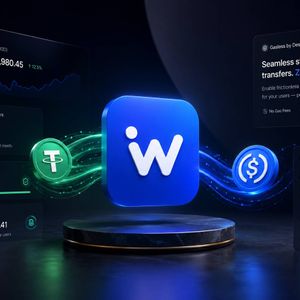
Stablecoin holders run into the same friction every month: USDT and USDC sit in the wallet, but the transfer fails without ETH or TRX to cover the network fee. The token is in the wallet, the recipient is ready, and the transaction still cannot move. IronWallet solves this through gasless USDT and USDC transfers, which deduct the network fee directly from the stablecoin being sent. The implementation runs on Ethereum and Tron, the two networks that carry the bulk of stablecoin volume globally. With Tron alone hosting roughly $86 billion of USDT as of April 2026, the gasless approach removes one of the longest-standing barriers to everyday stablecoin use. The Problem Gasless Transfers Solve Every blockchain transfer requires a network fee paid in the chain's native token. Send USDT on Tron, and the transfer fails without TRX. Send USDC on Ethereum, and the wallet asks for ETH first. This requirement creates a "stuck token" situation that hits stablecoin holders constantly: the wallet shows a USDT balance, but the transfer cannot complete because the gas token balance is zero. The workaround most users follow is awkward: Buy a small amount of TRX or ETH on a centralized exchange Withdraw it to the wallet Wait for confirmation Send the stablecoin Each step adds time, exchange fees, and friction. In regions where access to centralized exchanges is restricted or expensive, the workaround can become a hard barrier to using stablecoins at all. Gasless stablecoin transfers remove the requirement to pay the network fee in the same token being sent. The wallet handles the fee abstraction in the background, and the user never needs to hold a separate gas token. How IronWallet Handles Gasless Transfers The IronWallet gasless mechanism works the same way on both supported networks: when a user sends USDT or USDC, the wallet deducts the network fee directly from the stablecoin balance. Send 100 USDC, and a small portion covers the network fee, with no ETH balance required in the wallet at any point. The transaction settles on the underlying blockchain like any other transfer; the abstraction sits at the wallet layer, not the protocol layer. Two implementation paths run in parallel: On Ethereum: the gasless flow uses paymaster infrastructure introduced through EIP-7702 and the Pectra upgrade in May 2025 On Tron: the gasless flow uses the native Gas-Free mechanism launched by the Tron network in early 2025, which lets wallets deduct USDT-denominated fees directly Both paths produce the same user experience: the stablecoin sender sees one number deducted, and that number includes both the transfer amount and the network fee abstracted into the same asset. IronWallet applies this uniformly across the supported networks, which means stablecoin users move between Tron and Ethereum without switching mental models or managing two separate gas tokens. USDT on Tron: Sub-Cent Transfers Without TRX Tron is the network of choice for USDT transfers worldwide. Around 75% of all 2025 USDT transfer count happened on Tron , with more than 290 million transfers cleared on the network last year alone. Per-transfer cost runs about $0.20 with TRX staking for Energy, and Proposal #104 in August 2025 cut the energy unit price by roughly 50%, dropping the cost further. The traditional Tron fee model requires users to hold TRX for Energy and Bandwidth, the two resources Tron uses instead of EVM-style gas. Users typically pick one of two approaches: Stake TRX for free daily Energy: delegate TRX to obtain a recurring Energy allowance without burning the token Burn TRX per transfer: let the network deduct TRX directly to cover Energy and Bandwidth on each transaction Either approach requires holding TRX in the wallet alongside the USDT. IronWallet handles the Tron side through gasless USDT transfers that pay the network fee in USDT directly. A user holding only USDT on Tron in IronWallet can send to any TRC-20 address without first acquiring TRX. The wallet abstracts the Energy and Bandwidth requirement, deducts the network cost from the USDT being moved, and completes the transfer. With no TRX for USDT required at any step, high-frequency stablecoin users, particularly those in regions where USDT operates as a dollar proxy, gain a real friction reduction. The ability to pay for gas in stablecoin removes one of the longest-standing barriers to everyday stablecoin use on Tron. USDC on Ethereum: Stablecoin-Paid Gas Through Paymasters Ethereum's path to gasless transfers opened with the Pectra upgrade. The upgrade brought EIP-7702, which lets externally-owned accounts temporarily delegate to smart contract logic during a transaction. Paymaster contracts use this to cover gas fees on behalf of users in exchange for an alternative payment token, typically the stablecoin being transferred. IronWallet integrates this paymaster flow for gasless USDC on Ethereum. A user holding USDC with zero ETH balance can send USDC to any Ethereum address, and the wallet pays the paymaster service in USDC to cover the ETH gas. The fee is deducted from the USDC balance directly, with no manual paymaster setup or contract deployment required from the user. The mechanism extends across the Ethereum ecosystem because EIP-7702 is a protocol-level change, not a wallet-specific feature. IronWallet's contribution is the in-app abstraction: surface a simple "send" action, handle the paymaster routing in the background, and deduct the stablecoin-paid gas from the same balance the user is sending. Stablecoin holders bypass the ETH-acquisition workaround entirely and treat USDC like any other dollar-denominated asset. Practical Use Cases for Gasless Stablecoin Transfers The mechanism matters because of what it makes possible. Gasless stablecoin transfers in IronWallet apply across a range of real situations: Remittances and cross-border payments: users can receive USDT or USDC into the wallet and forward it to family or counterparties without a side trip to acquire native gas DeFi participation: moving stablecoins to and from lending protocols, swap aggregators, or yield platforms no longer requires maintaining an ETH or TRX balance for every action Cross-chain workflows: users moving stablecoins between Tron and Ethereum in IronWallet handle both legs of the journey without managing two different native gas tokens Retail crypto payments: combined with WalletConnect Pay support, the gasless mechanism extends to checkout flows where users pay merchants in USDT or USDC directly from the wallet The shared thread across these cases: the user works with the stablecoin they hold, and the wallet handles the rest. The Verdict IronWallet removes the gas token requirement that has slowed stablecoin adoption since the early days of USDT and USDC. By deducting network fees directly from the stablecoin being sent on both Ethereum and Tron, the wallet closes the gap between holding a digital dollar and being able to use it. The implementation rests on protocol-level developments (Pectra, EIP-7702, Tron Gas-Free) plus in-app abstraction that hides the complexity from the user. The result is a stablecoin experience that behaves more like a familiar payment app and less like a multi-step crypto workflow. Disclaimer: This article is provided for informational purposes only. It is not offered or intended to be used as legal, tax, investment, financial, or other advice.