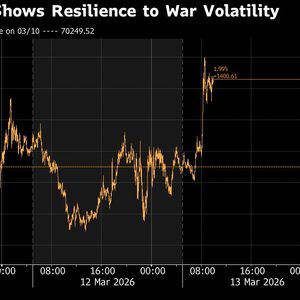
BitcoinWorld WTI Crude Oil Skyrockets Past $95.50 as Iran’s Dire Strait of Hormuz Closure Threat Sparks Global Panic Global energy markets experienced a seismic shock on Thursday as West Texas Intermediate crude oil prices surged above $95.50 per barrel following Iran’s declaration that the Strait of Hormuz must remain closed. This critical development immediately triggered concerns about potential supply disruptions affecting approximately 20% of the world’s oil shipments. Market analysts worldwide are now closely monitoring the situation as geopolitical tensions escalate in one of the planet’s most vital maritime corridors. WTI Price Surge Reflects Immediate Market Reaction The benchmark WTI crude oil contract climbed dramatically during Thursday’s trading session, ultimately settling at $95.52 per barrel. This represents the highest closing price since November 2022 and marks a significant 4.2% single-day increase. Trading volumes spiked to nearly double their 30-day average as institutional investors and energy traders reacted to the developing situation. Meanwhile, Brent crude, the international benchmark, followed a similar trajectory, reaching $98.75 per barrel. Market data reveals several key factors driving this price movement: Immediate supply concerns: The Strait of Hormuz handles approximately 21 million barrels of oil daily Inventory drawdowns: U.S. crude inventories fell by 4.5 million barrels last week Refinery capacity: Gulf Coast refineries are operating at 92% capacity Forward pricing: December 2025 futures show continued upward pressure Geopolitical Context of the Strait of Hormuz The Strait of Hormuz represents one of the world’s most critical energy chokepoints, connecting the Persian Gulf with the Gulf of Oman and the Arabian Sea. This narrow waterway, only 21 nautical miles wide at its narrowest point, serves as the primary transit route for oil exports from Saudi Arabia, Iran, the United Arab Emirates, Kuwait, and Iraq. Historically, tensions in this region have consistently influenced global oil prices and energy security discussions. Historical Precedents and Current Implications Iran has previously threatened to close the Strait of Hormuz during periods of heightened international pressure, particularly concerning its nuclear program and economic sanctions. The current declaration follows recent escalations in regional diplomacy and comes amid ongoing negotiations regarding Iran’s oil exports. Energy analysts note that while complete closure remains unlikely due to international naval presence, even temporary disruptions could create significant market volatility. A comparison of recent Strait of Hormuz incidents shows clear patterns: Year Incident Price Impact Duration 2019 Tanker attacks +4.5% 2 weeks 2021 Seizure incidents +3.2% 1 week 2023 Naval exercises +2.1% 3 days 2025 Closure threat +4.2% (current) Ongoing Global Energy Market Impacts and Responses International energy markets responded immediately to the developing situation. Asian markets, which receive approximately 65% of their crude oil through the Strait of Hormuz, showed particular sensitivity to the announcement. Japanese and South Korean energy officials confirmed they are reviewing emergency stockpile release procedures. Similarly, European energy ministers scheduled an emergency meeting to discuss contingency plans should supply disruptions materialize. The U.S. Department of Energy issued a statement confirming it is monitoring the situation closely. The Strategic Petroleum Reserve currently holds approximately 350 million barrels, representing roughly 18 days of total U.S. oil imports. Energy analysts suggest that sustained prices above $95 per barrel could potentially trigger coordinated international stockpile releases if the situation escalates further. Economic Consequences and Inflation Concerns Sustained higher oil prices create significant economic implications across multiple sectors. Transportation costs immediately increase for shipping companies, airlines, and logistics providers. Manufacturing industries face rising production expenses, particularly for petrochemical-dependent products. Consumers experience direct impacts through higher gasoline prices, with current projections suggesting a potential 15-20 cent per gallon increase if current price levels persist. Central banks worldwide now face additional inflationary pressures. The Federal Reserve, European Central Bank, and Bank of England have all previously identified energy price stability as crucial for maintaining their inflation targets. Financial markets are pricing in potential adjustments to interest rate trajectories should energy-driven inflation reemerge as a sustained concern. Alternative Supply Routes and Market Adjustments Energy companies are actively evaluating alternative transportation methods should Strait of Hormuz transit become restricted. Pipeline networks through Saudi Arabia to the Red Sea represent one potential alternative, though capacity limitations exist. The Abu Dhabi Crude Oil Pipeline bypasses the strait entirely but serves only a portion of regional exports. Shipping companies may consider longer routes around the Arabian Peninsula, adding approximately 8-10 days to transit times and significantly increasing transportation costs. Regional Security Considerations and Diplomatic Channels The United States Fifth Fleet, based in Bahrain, maintains a continuous presence in the region with specific responsibility for ensuring freedom of navigation through the Strait of Hormuz. Regional partners including Saudi Arabia, the United Arab Emirates, and Oman participate in coordinated maritime security initiatives. Diplomatic efforts are reportedly underway through multiple channels, including United Nations mediation and direct communications between involved parties. International law clearly establishes the Strait of Hormuz as an international waterway subject to transit passage rights under the United Nations Convention on the Law of the Sea. Any attempt to restrict navigation would violate established international norms and likely trigger coordinated international responses. Historical precedents suggest that while threats often emerge during diplomatic tensions, actual closure remains extremely rare due to the significant consequences for all regional actors. Conclusion The WTI crude oil price surge above $95.50 directly reflects market concerns about potential Strait of Hormuz disruptions following Iran’s closure declaration. This development highlights the ongoing fragility of global energy supply chains and the persistent geopolitical risks in critical maritime corridors. Market participants, policymakers, and energy consumers worldwide must now monitor the situation closely as diplomatic and security developments unfold. The immediate price reaction demonstrates how quickly geopolitical events can translate into tangible economic impacts across the global energy landscape. FAQs Q1: Why is the Strait of Hormuz so important for global oil markets? The Strait of Hormuz is the world’s most important oil transit chokepoint, handling approximately 21 million barrels per day or about 20% of global oil consumption. Major producers including Saudi Arabia, Iran, the UAE, and Kuwait depend on this route for exports. Q2: How likely is an actual closure of the Strait of Hormuz? Most analysts consider complete closure unlikely due to international naval presence and the severe consequences for all regional actors. However, even temporary disruptions or heightened insurance costs can significantly impact oil prices and shipping logistics. Q3: What are the main alternatives if the strait becomes restricted? Alternative routes include pipelines from Saudi Arabia to the Red Sea, the Abu Dhabi Crude Oil Pipeline, and longer shipping routes around the Arabian Peninsula. Each alternative has capacity limitations or significantly increases transit times and costs. Q4: How do higher oil prices affect everyday consumers? Higher oil prices translate directly to increased gasoline and diesel costs, higher transportation expenses for goods, and potentially broader inflationary pressures as energy costs ripple through production and distribution chains. Q5: What historical precedents exist for Strait of Hormuz disruptions? Previous incidents include tanker attacks in 2019, vessel seizures in 2021, and periodic naval exercises that have temporarily heightened tensions. Each event caused temporary price spikes but did not result in prolonged closure of the waterway. This post WTI Crude Oil Skyrockets Past $95.50 as Iran’s Dire Strait of Hormuz Closure Threat Sparks Global Panic first appeared on BitcoinWorld .