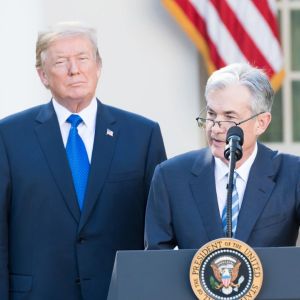
As Chairman Jerome Powell walked into his two-day meeting with colleagues today, he is being pushed into the hardest call of his time at the Federal Reserve, and the reason is right there in front of him. And by that, of course, we mean the US and Israel’s war in Iran, which has plunged the entire global economy into a state of unnecessary chaos. Just weeks ago, inflation looked calmer, and rate cuts seemed closer, but now oil and gas prices are rising again due to attacks on infrastructure and shipping problems in the Middle East. And therein lies Powell’s dilemma:- He can hold rates high to stop another inflation problem, or he can cut and risk doing it just as energy costs start feeding into the wider economy. Energy prices force Powell to defend rates as Trump demands cuts… again Even as he is losing the war in Iran and receiving heavy backlash from the public, Mr. Trump [naturally] once again made the time to publicly insult Powell and demand rate cuts at the current meeting. Likely not knowing a policy meeting was starting Tuesday, the US president had on Monday told reporters that the Federal Reserve should hold a “special meeting” to cut interest rates “right now.” Right now, holding interest rates steady in March would give the Fed more protection against a new round of inflation. The war in Iran has already rallied the price of gas and oil, and if that lasts, Americans could start paying more for plane tickets, deliveries, and food in the next few months. Energy costs do not stay trapped in one corner of the economy, though, they spread. The inflation data the Fed has so far does not yet show the full hit from this conflict. The consumer price index released on March 11 rose 2.4% from a year earlier, which was the same annual increase as in January. But most of the data for that report came before the conflict began. So the number does not yet capture the latest jump in fuel prices. Markets are already leaning hard toward no change. CME FedWatch, which uses 30-Day Fed funds futures, currently shows a 99% chance that the Fed keeps its benchmark rate in a range of 3.5% to 3.75% on March 18. Expectations have also turned more hawkish for the next meetings, with the probability of the Fed keeping the same range on April 30 at 95% as of press time. The odds of no change in June stand at 77%, and a month ago, those numbers were 70% for April and 31% for June. Weak jobs data and global rate meetings leave Powell with no easy exit The other side of the problem is growth. The U.S. job market is no longer giving the Fed much comfort. The February jobs report showed the United States lost 92,000 jobs that month. The unemployment rate also rose to 4.4%. That was a sharp turn from January, and from the more hopeful labor outlook the central bank had at its last meeting. This same problem is now hitting other central banks. The European Central Bank, the Bank of England, and Switzerland’s central bank are all expected to keep rates unchanged as well. Like the Fed, they are dealing with the same ugly mix: higher energy prices, inflation risk, and weaker growth. In Europe, investors are already reacting. Longer-term government bond yields have been volatile as traders weigh the inflation effect of higher oil prices against the growing risk to eurozone growth. Last week, Christine Lagarde said on French television that policymakers would not allow Europe to go through an inflation shock like the one that followed Russia’s invasion of Ukraine in 2022. The Bank of England faces a rough backdrop too. Fuel costs are rising. That makes an early rate cut less likely, even as the labor market cools and GDP growth stays flat. Switzerland has had lower inflation than many other economies, but even there, the outlook is changing. Higher energy prices are feeding into consumer costs, and the Swiss National Bank is also expected to stay on hold. Economists say the risk balance in Switzerland is now leaning more toward higher inflation if the shock gets worse. There’s a middle ground between leaving money in the bank and rolling the dice in crypto. Start with this free video on decentralized finance .