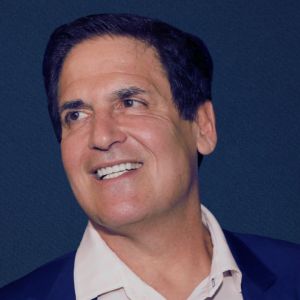
Mark Cuban, a billionaire investor and Shark Tank personality, is calling for a new federal tax on AI tokens, arguing that the legislation could raise billions of dollars each year and spur major AI companies to develop more efficient systems. Cuban recommended charging less than 50 cents for every one million AI tokens processed by large commercial models. He believes the concept could give the United States a way to cope with the rapidly growing AI infrastructure while also addressing its growing electricity needs and the clout of Big Tech companies. Why does Mark Cuban want an AI token tax? Cuban compares the current AI debate to the early years of cryptocurrency regulation. He said many crypto professionals used to think that legislation would squash innovation. After several years, however, there was a consensus that regulation was required for the technology to achieve wider adoption, and with that, the industry began working with lawmakers and funding political advocacy groups. “This is exactly what everyone said about crypto,” Cuban wrote on social media while discussing the move. “Any regulation is bad.” The businessman said AI companies, too, could one day take the same route. As artificial intelligence gets more deeply embedded in finance, healthcare, education, and government services, Washington and other global capitals are beginning to feel the pressure for clearer oversight. Under Cuban’s proposal, the tax would primarily target large commercial AI providers running massive language models. Open-source AI projects and smaller locally operated systems wouldn’t be in the mix. The concept is modeled much like a sales tax in which companies pay not for profit alone, but rather based on usage. Revenue and energy concerns drive the proposal One of Cuban’s key points is that the tax could make companies more efficient at building AI models. Large AI models need massive computing power, which also means high electricity consumption. Data centers that serve AI are putting increasing strain on US power grids. As competition heats up, companies including OpenAI, Microsoft, Google, and Meta are pouring billions into AI infrastructure. Cuban projected that the levy would initially raise about $10 billion per year for the federal government. The magnitude of it would likely increase dramatically as AI usage spreads across multiple verticals. The money, he said, may be used to shrink federal debt or help workers hurt by AI-driven automation. Governments worldwide are already debating how to deal with job losses that generative AI systems will inflict by taking away office, customer service, and creative work. Advocates for AI supervision say businesses should pay for the economic impacts of automation. Other economists have also floated ideas like robot taxes or AI service levies to help governments prepare for workforce transitions. And Cuban’s idea arrives at a moment when policymakers are taking increasing notice of the environmental impact of AI growth. Larger data centers require significant electricity and water for cooling systems. Energy experts fear that demand for AI could grow dramatically over the next decade if it continues at its current pace. Could the proposal face strong opposition? Notwithstanding Cuban’s arguments, the proposal has already received criticism from parts of the technology industry. Palmer Luckey, founder of the defense technology company Anduril Industries, questioned the idea and warned that taxing AI use risks hurting American companies while giving foreign competitors a leg up. If operating costs in the United States rise, Luckey said companies and consumers may migrate to offshore AI providers. He also raised concerns about building new systems to track AI use, noting that such infrastructure could expand government oversight of technology companies. Critics from the libertarian and startup communities also worry that the proposal would slow innovation at a moment when it is critical to compete in the world’s AI race. The US is currently competing with countries like China for the fruits of artificial intelligence development, and some industry leaders worry that additional taxes will erode this edge. At the moment, there is little sign that Congress is even getting ready to back such a solution. But the conversation reflects a larger trend: policymakers and business leaders are increasingly engaging in a more generative line of thought on AI regulation. Don’t just read crypto news. Understand it. Subscribe to our newsletter. It's free .